See the AI in action
Same RFP, same team. Here's what sourced answers look like.
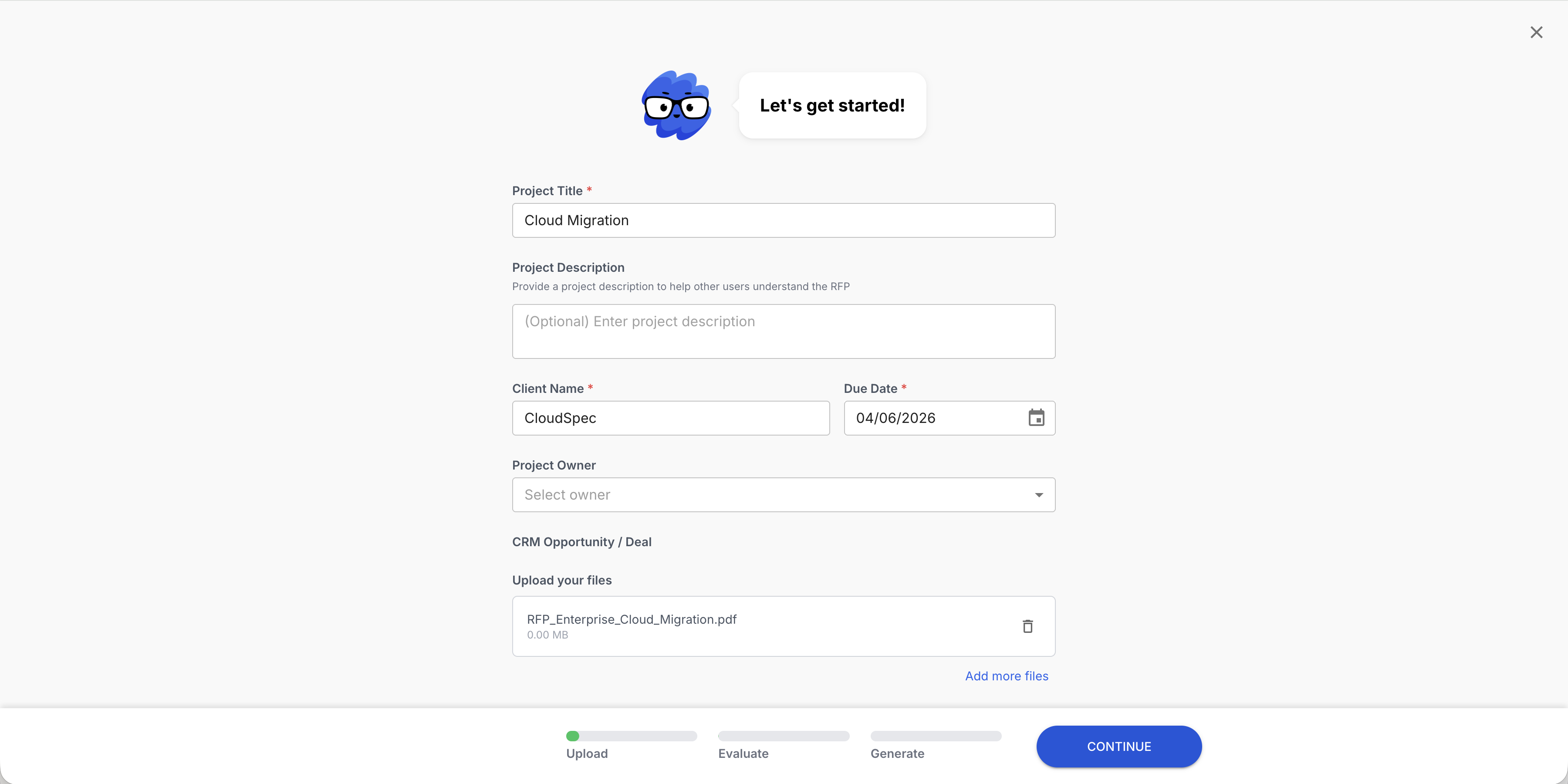
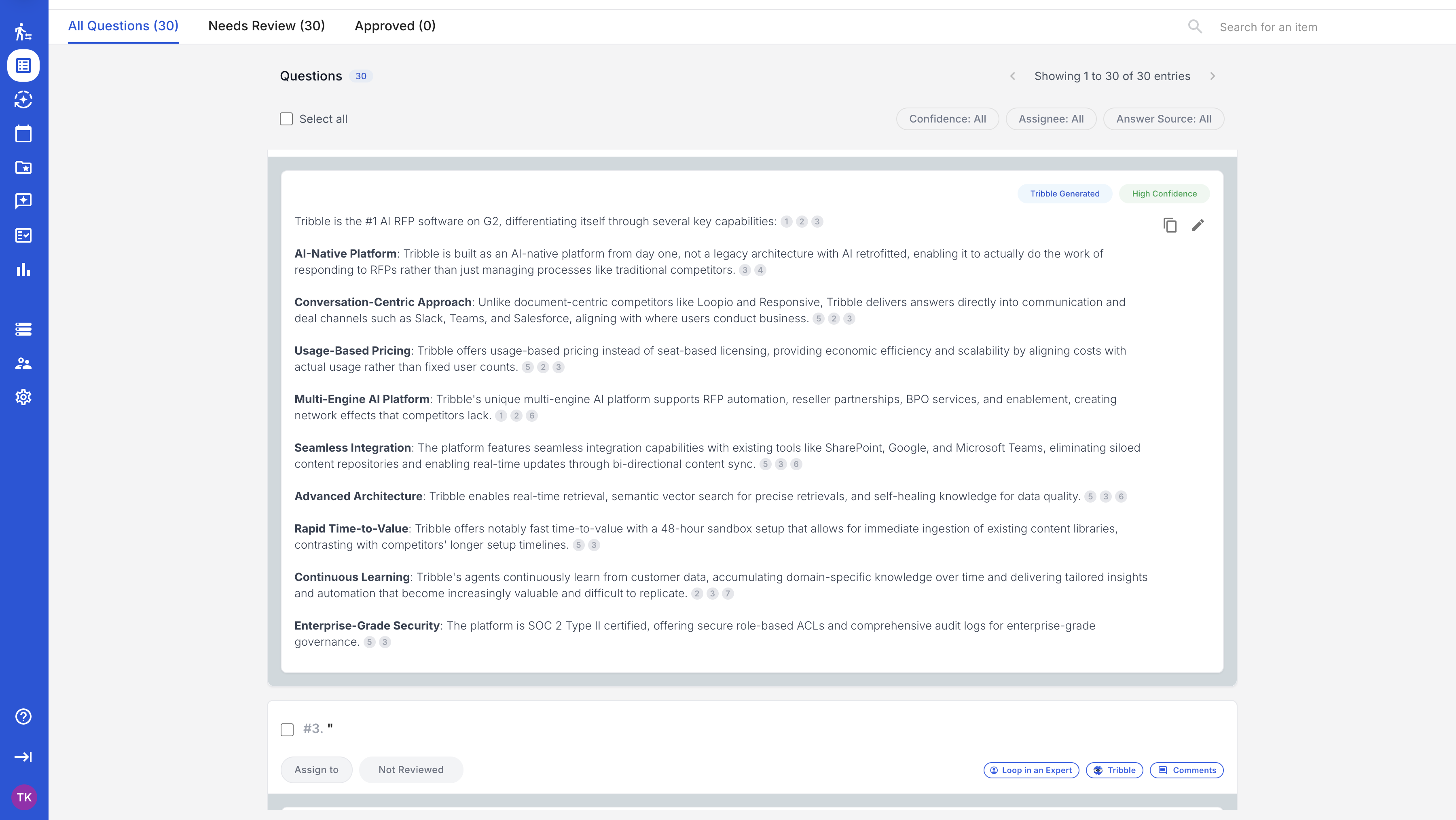
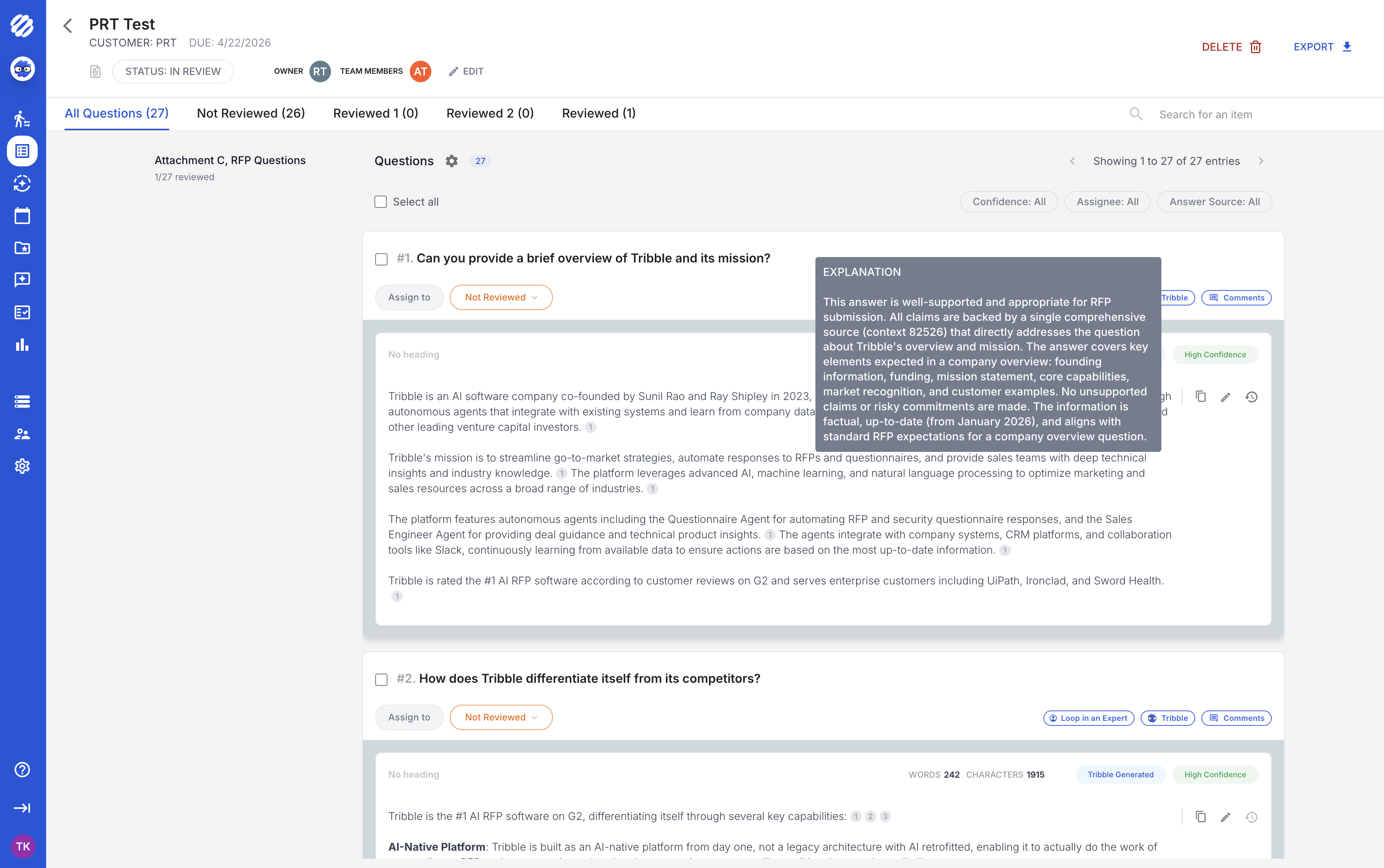
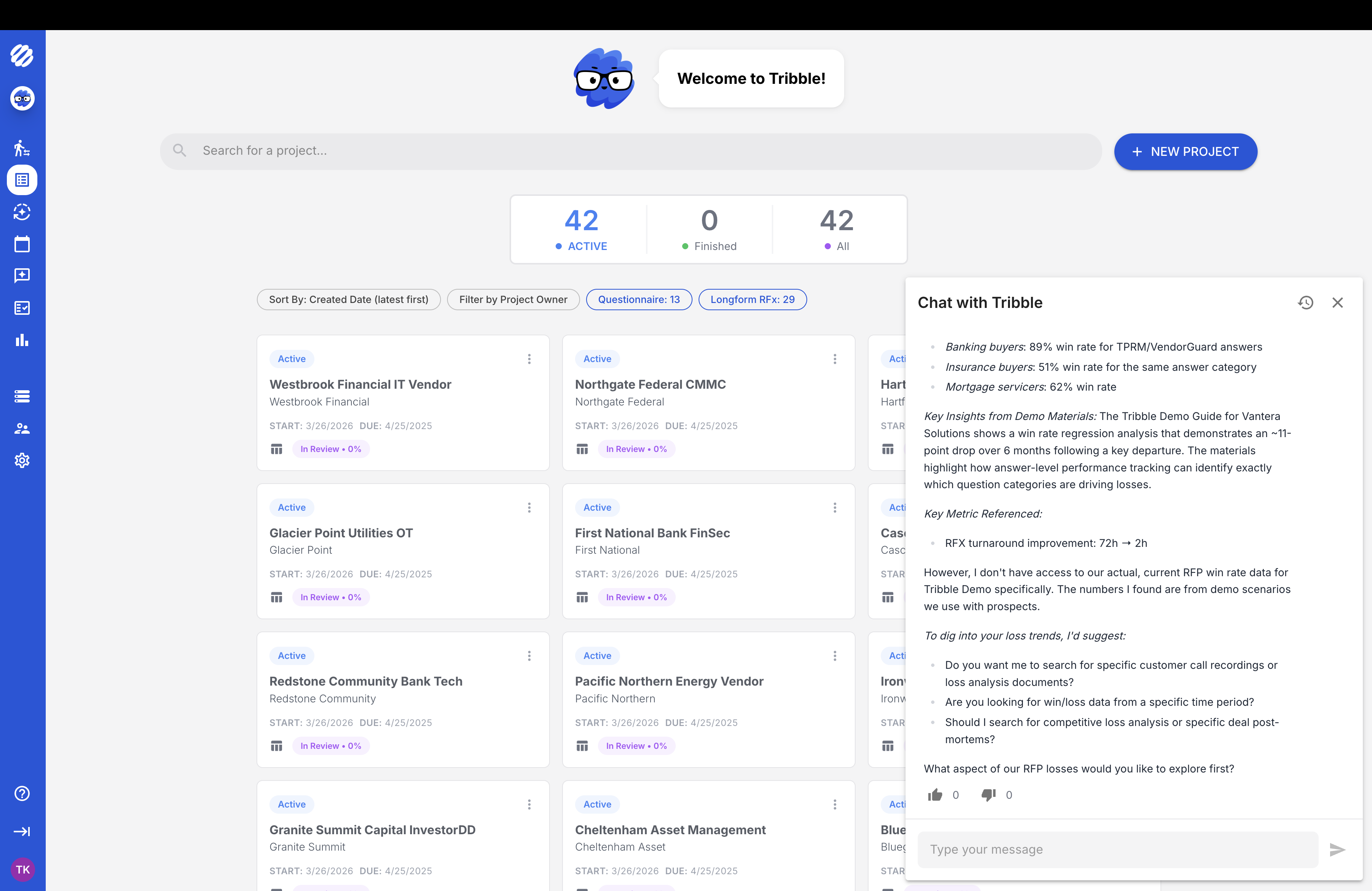
Loopio manages your content library. Tribble drafts from your documents and cites every source.
Loopio's Response Intelligence is trained on historical answer data. Tribble's AI generates responses directly from your documents and links every answer to its source. The difference: your compliance team can verify where every answer came from.
Based on Tribble customer data, 2024-2026
Both platforms use AI. The gap is what the AI does with your content.
01 -- Attribution
Tribble links every AI-generated answer to the specific document and section it was drafted from. Loopio's Response Intelligence generates answers from your content library without linking to a specific source. When your compliance team needs to verify an answer, they need the source.
02 -- Confidence
Tribble scores every individual answer. You know exactly which 5 answers out of 200 need human review before you start. Loopio's Confidence Pulse monitors whether library content is going stale over time -- a different problem. It doesn't tell you which specific draft answers in this submission are weak.
03 -- Consistency
Tribble checks every answer against every other answer before submission. Contradictions across 200 items are flagged automatically. Loopio doesn't offer cross-answer consistency checking -- inconsistencies ship unless a reviewer catches them manually.
04 -- Maintenance
Loopio's Library is powerful but requires ongoing manual curation of Q&A pairs to stay current. Tribble learns from your completed responses automatically and sources directly from your live documents. Your knowledge base grows with every submission -- without a library manager.
Same RFP, same team. Here's what sourced answers look like.
Tribble serves enterprise teams across financial services, healthcare, security, and technology. The 95%+ first-draft approval rate is measured across all deployments. Scale doesn't matter if your reviewers still have to rewrite half the answers.
Your library knowledge comes from your underlying documents. Tribble reads those same source documents directly -- policies, past proposals, knowledge base articles. Most teams run both briefly during a transition and are fully switched within two weeks. Nothing is lost; it's repurposed.
Loopio's AI is trained on historical answers across their customer base and generates content from your curated library. Tribble's AI drafts directly from your live documents and cites the exact source. Every answer is traceable to a document you control.
Tribble connects to 40+ source systems including all major document stores, CRM, and collaboration tools. Expert routing via Slack and Teams is native. Loopio's 80+ integrations are strong -- but most teams only actively use a handful. The content sources that matter are covered.
| Capability | Tribble | Loopio |
|---|---|---|
| AI approach | ✓ RAG from your documents with source citation | Response Intelligence trained on your historical answers |
| Source attribution | ✓ Every answer linked to specific source document | Not available |
| Confidence scoring | ✓ Per-answer confidence on each draft | Confidence Pulse (tracks library content freshness, not per-draft scoring) |
| Cross-answer consistency | ✓ Contradiction detection across all answers | Not available |
| Library maintenance | Automatic — learns from completed RFPs | Manual curation required to stay current |
| Expert routing | ✓ Native Slack & Teams routing by question type | Slack & Teams integration with automated nudges |
| CRM integration | ✓ Bidirectional Salesforce + HubSpot | Start projects from CRM |
| Content sources | 40+ integrations | 80+ content source integrations |
| DDQ / compliance questionnaires | ✓ Full DDQ support (PE, ODD, hedge funds) | ✓ DDQ automation with content library |
| First-draft approval rate | 95%+ | Not published |
| Onboarding time | 48 hours | 2-6 week implementation |
| SOC 2 Type II | ✓ | ✓ |
A library is only as good as the last time someone updated it. That maintenance tax compounds every quarter.
| Tribble | Library-based approach (Loopio) | |
|---|---|---|
| Knowledge source | Live documents, policies, past proposals — always current | Curated Q&A pairs — only as current as last manual update |
| When a policy changes | ✓ Update the source document. Answers update automatically. | Someone has to find every affected library entry and update it manually |
| New product launch | ✓ Add the product docs to your source. Done. | Build out new Q&A pairs for the new product area |
| Source attribution | ✓ Every answer links to its source document | No. The answer lives in the library, divorced from its source |
| Consistency check | ✓ Cross-answer contradiction detection before submission | Manual review. Inconsistencies ship if no one catches them. |
| Stale answer risk | Low — answers are drafted fresh from current source docs each time | High — library entries drift as products and policies evolve |
| Onboarding time | 48 hours | 2-6 weeks to build out the library before it's useful |
The stale library problem
Every policy change, product update, or pricing revision that doesn't make it into your library becomes a liability. Stale answers ship. Prospects flag the inconsistency. Your credibility takes a hit no correction email fixes. Tribble drafts from your live source documents every time -- there's no library to go stale.
See How Tribble Eliminates Stale AnswersBring a real RFP. We show you sourced, cited answers from your documents in the same session. No prep required.
★★★★★ 4.8/5 on G2 · SOC 2 Type II · 48-Hour Onboarding · No Library Build-Out